
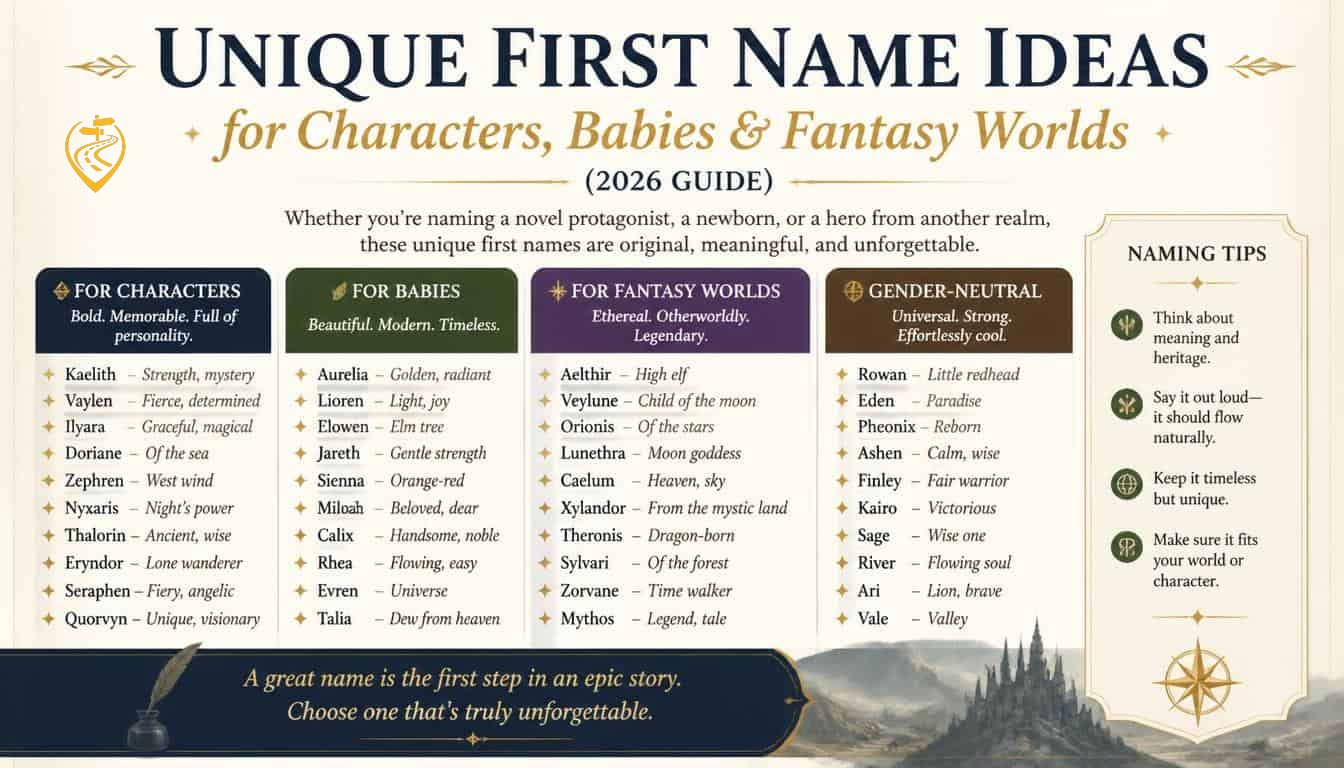
A first name is the very first piece of identity anyone encounters — before a personality forms, before a story unfolds, before a reputation is built.
Whether you’re naming a newborn, a fantasy hero, or a character in your next novel, the right first name carries meaning long before the “why” behind it is ever explained.
Finding that name, however, isn’t always easy. That’s where a first name generator comes in — a fast way to explore hundreds of options filtered by culture, style, and tone until one finally feels right.
This guide breaks down how first names work across different contexts, what makes a name memorable, and how to use a generator effectively to land on something that fits.
Quick Answer: A first name generator instantly produces name suggestions filtered by culture, style, length, and gender association.
It’s used by parents naming babies, writers naming fictional characters, and game designers populating fantasy worlds — eliminating manual research and speeding up the naming process from hours to minutes.
What Is a First Name Generator?
A first name generator is a tool that produces name suggestions based on selected filters — typically cultural origin, gender association, length, and style (modern, classic, fantasy, or unisex).
Instead of manually researching name meanings and origins one at a time, a generator surfaces dozens of relevant options in seconds, which can then be filtered, favorited, or exported.
Writers use them to name characters quickly without breaking their creative flow. Parents use them to explore naming directions they hadn’t considered.
Game designers use them to populate NPCs, factions, or entire fictional lineages.
The common thread is the same: a first name generator removes the blank-page problem and replaces it with curated inspiration.
Types of First Names You Can Generate
Classic and Timeless Names
These are names with long historical use across generations — names like Elizabeth, James, or Margaret.
They tend to feel grounded and familiar, which makes them a common choice for both real-world naming and grounded, realistic fiction.
Modern and Trending Names
Modern names reflect current cultural naming patterns — often shorter, phonetically simple, and popularized by recent media, celebrities, or generational shifts.
These work well for contemporary character names or babies born into today’s naming trends.
Fantasy and Fictional Names
Fantasy names lean into invented phonetics — combinations of syllables that sound otherworldly while still being pronounceable.
These are built for world-building: elves, warriors, mages, and other characters that exist outside real-world naming conventions.
Cultural and Regional Names
Names rooted in specific cultures — Japanese, Arabic, Scandinavian, Celtic, and beyond — carry linguistic patterns and meanings tied to their origin.
These are useful when a character’s background, heritage, or setting needs to feel authentic and specific rather than generic.
Unisex and Gender-Neutral Names
Names that aren’t tied to a specific gender have grown steadily in both real-world use and fiction, often chosen for their sound and meaning rather than convention.
First Name Types at a Glance
| Name Type | Best For | Example Feel |
| Classic/Timeless | Real-world use, grounded fiction | Elizabeth, James |
| Modern/Trending | Contemporary characters, current babies | Kai, Nova |
| Fantasy/Fictional | World-building, RPGs, novels | Thalindra, Vaskar |
| Cultural/Regional | Heritage-specific characters or names | Yuki, Amara, Soren |
| Unisex/Neutral | Flexible, non-gendered naming | Rowan, Ari |
This table summarizes the core categories covered in detail below, making it easy to jump to the type most relevant to your naming project.
How to Choose the Right First Name
- Match the name to the context. A name that works for a cyberpunk protagonist won’t necessarily work for a newborn, and vice versa. Before generating names, define the setting: realistic and modern, historical, or fantastical. This single filter eliminates most mismatched results immediately.
- Say it out loud. Names are read silently but experienced verbally — in conversation, in dialogue, in introductions. A name that looks fine on the page can feel clumsy when spoken. Testing pronunciation early avoids this problem later.
- Check the meaning if it matters to your context. For baby names especially, many parents want a name that carries a specific meaning — strength, light, peace, or a family connection. For fictional characters, a name’s meaning can subtly reinforce their role in the story, even if readers never look it up directly.
- Consider length and rhythm. Short, punchy names (Kai, Zara) create a different feel than longer, flowing names (Alessandra, Theodore). Neither is better — it depends on the tone you’re going for.
- Avoid unintentional associations. A quick search of the name alongside common last names or in isolation can reveal unwanted associations — a similar-sounding celebrity, an awkward pun, or an existing well-known character.
Using a First Name Generator Effectively
Start broad, then narrow. Begin with a general cultural style or category, generate a batch, and note which ones catch your attention — even if none are perfect yet.
Patterns will emerge in what you’re drawn to (short names, harder consonants, specific origins), and you can re-filter based on that instinct.
Favoriting names as you go is far more efficient than trying to remember the best one from fifty options.
Export or copy the shortlist, then revisit it after a break — names that still feel right after stepping away are usually the strongest choices.
Frequently Asked Questions
Q.What’s a good first name for a fantasy character?
Fantasy names generally work best when they follow a consistent sound pattern within your world — sharp consonants for warrior cultures, softer flowing syllables for elegant or mystical races. Consistency across your character roster makes a fictional world feel intentional rather than randomly assembled.
Q.How do I pick a unique baby name that isn’t too unusual?
Look for names that are uncommon in your immediate circle but still have established linguistic roots or existing usage elsewhere. This keeps the name distinctive without making it difficult to pronounce or spell.
Q.Can I use a name generator for professional writing projects?
Yes. Many authors and game writers use generators specifically to speed up early drafting, later refining or replacing names during editing once a character’s personality is fully formed.
Q.Do first names affect how a character is perceived by readers?
Names carry implicit tone. Harder consonant sounds (K, T, G) tend to read as strong or aggressive, while softer sounds (L, M, S) often feel gentle or approachable. This is a well-documented pattern in linguistics known as sound symbolism, and writers frequently use it — consciously or not — when naming characters.
Q.What’s the difference between a first name generator and a full name generator?
A first name generator focuses solely on given names, offering more granular filtering by style and origin. A full name generator pairs first and last names together, which is useful for quickly generating complete character rosters but offers less control over each individual name choice.
Try the Free First Name Generator
Explore hundreds of first name combinations by culture, style, and length using the generator above — favorite the ones you like, export your shortlist, and find the name that fits your character, story, or search perfectly.
Explore More Generators: